Something strange drew me to the pavement of the city bypass one morning last September. The cortege of Queen Elizabeth was due to slow as it travelled along this road at 2pm.
I had volunteered as an event steward. There was a long line of us wearing hi-vis vests, each positioned by a lamp post. We’d arrived early to stand like this; silently announcing an event to the din of heavy traffic and an occasional morning dog-walker.
But through the day people steadily gathered. A woman had come alone turned to me and in a soft southern African accent said, “I just had to be here.” When I asked, she said she was from Rhodesia. It was strange her using the old colonial name for Zimbabwe. But then lots of strange things were happening. Trumpets and men-in-tights had by now proclaimed King Charles III. A daily mufti of pageantry was being acted out which was drawing huge crowds, causing them to stare in silence.
Like many I’m ambivalent about the British monarchy. Yet, like the Rhodesian, I wanted to be witness; to be part of the whole thing.
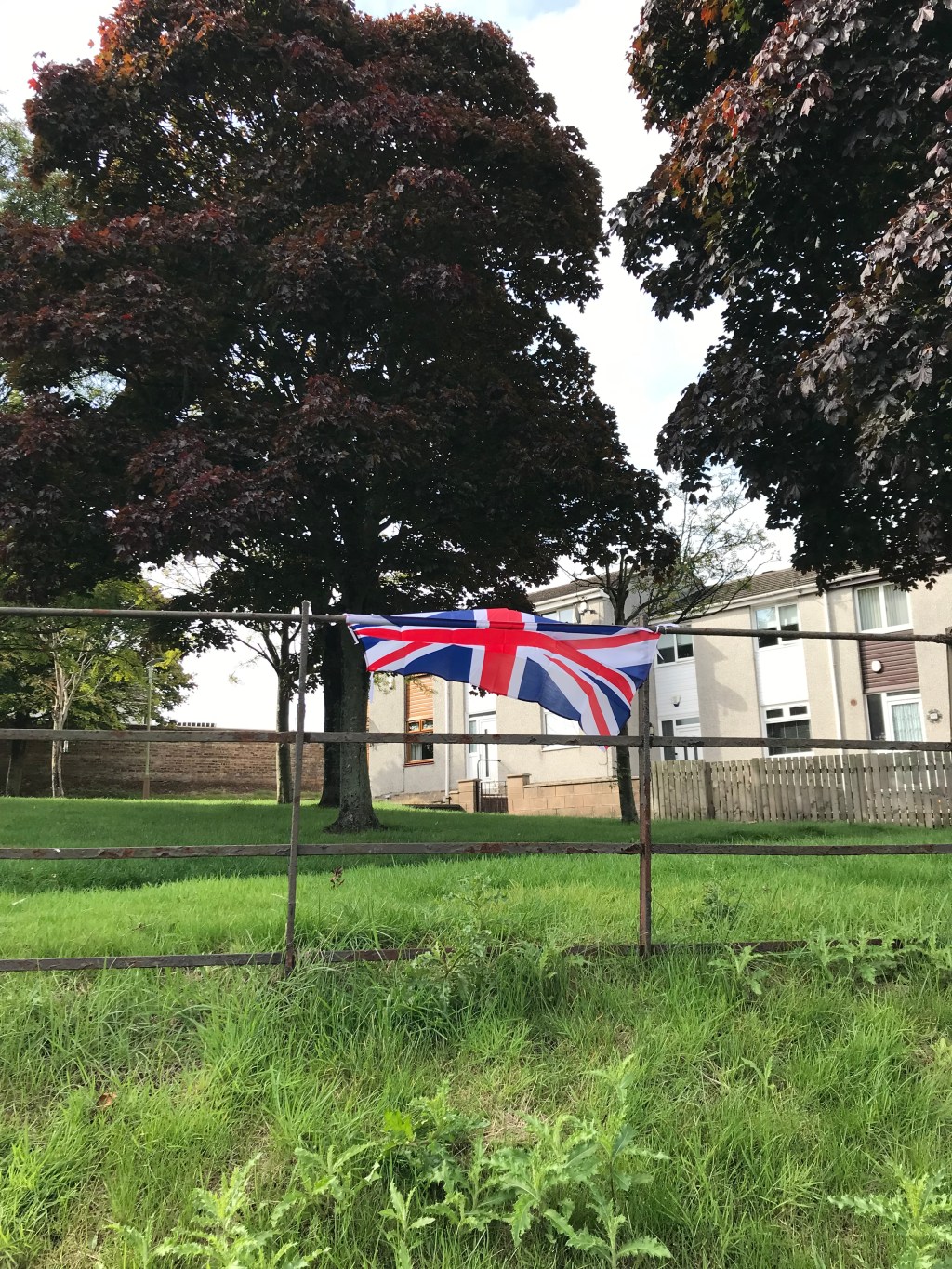
Alongside me was a large family from Nigeria. The residents of the nearby housing estates had come out to watch. I’d met several of my Sri Lankan students from the university. There were few Union Jacks – this is Scotland – but there was something of a jubilee atmosphere. Many people seemed to be enjoying an excuse to loiter outside and chat to neighbours. We all had purpose in standing by a noisy dual carriageway: this is the power of myth.
Perhaps what we were standing for was in part the Hero’s Journey; that timeless motif which exists in almost all cultures. The individual who sacrifices themselves for the benefit of the tribe. The factual details of life and death are secondary: a bloody goring on a battlefield or a quiet death in a library; a life of loud heroism or dignified duty; all can evoke the same response.
In life, the individual may be liked or not – may even be obscure – but in death they become something quite different. They become a story which has reached a climax.
There had already been a slew of sentimental stories about Queen Elizabeth; the ones which rang true were mostly unremarkable; the racier ones sounded improbable. Isolated cries against the monarchy, often grounded in cold fact, sounded like weak barks amid a much stronger silence. The details of the Queen’s life were fading and a much more powerful symbol was emerging.
The moment was drawing closer. People continued to gather by the road. A fleet of police vehicles raced past which caused a stir. Some spectators had been watching the progress of the cortege on the news via their mobile phones. It was being filmed from a helicopter, so the increasing sound of rotor blades meant she was close. At each break in the traffic, people leaned onto the road, only to be shouted back by a lone police officer.
Another fleet of police cars passed, then a silence. Traffic had been stopped. “She’s at Morrisons!” someone shouted. That meant minutes away. Necks craned, children were hoisted onto shoulders, mobile phone cameras were raised like periscopes.
And here they came, a long caravan of vehicles. The hearse was first. Dark colours all, the only flash of colour was the coffin itself, draped with what could have been the Royal Standard, a large wreath of what could have been lilies. It was too quick for the specifics: a blurred image was enough. A long line of vehicles followed. Necks twisted to watch them go by one-by-one. The procession was symbolic too: its length, its ability to close public roads, to draw such a large disparate group together; all this inspired awe.
After the last vehicle – a road sweeper – there was a hush. And a sadness, or perhaps it was awkwardness, in which I found it difficult to meet other people’s eye: having gone through the ritual it was difficult to know how we were supposed to act; so people did what they always do in this situation.
The roads which led off the ring road offered easy escape. People filed away. “Nice speaking to you” The Rhodesian said and disappeared before I had a chance to discover why she insisted on the colonial name.
Within minutes there was almost nobody, the road had been reopened, and traffic was roaring past again.
I would be asked what I personally felt about the passing of the monarch. I searched and found nothing. I could only repeat what was being said. I had participated in a rite which was ineffable yet meaningful; the power of myth lies in its strangeness.
 Bardo travel: Writings on experience and place
Leave a comment